From El Sokhna Port to Giza, Saqqara, and Memphis
Arriving at El Sokhna Port on the Red Sea coast, travelers cross the Eastern Desert and the Nile Valley to reach one of the most historically layered corridors in the world.
The route leads westward into the Nile Delta region. Here, three monumental sites unfold in proximity—each representing a distinct chapter of ancient Egyptian civilization.
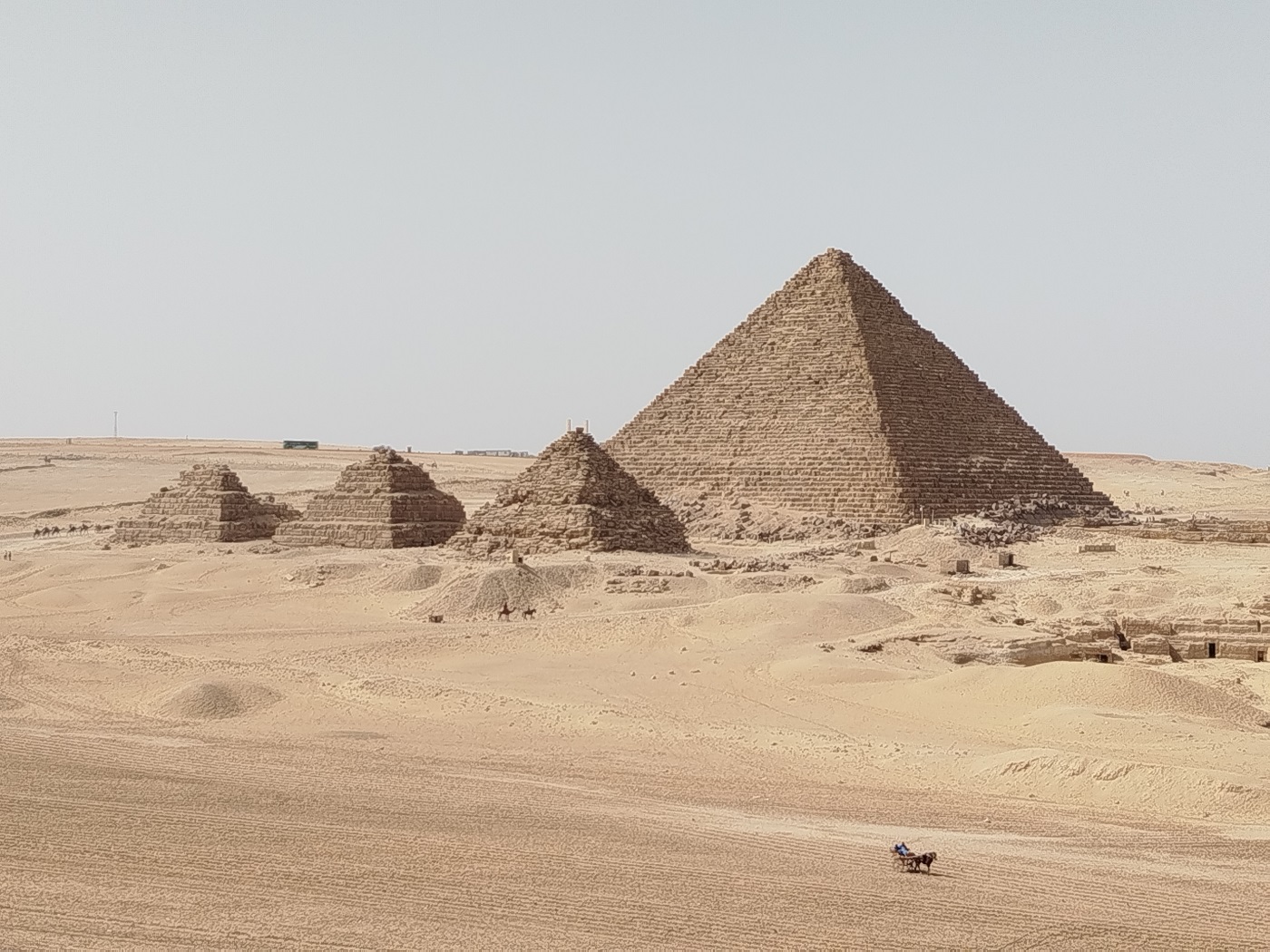
Giza commands the journey’s first impression with the Great Pyramid of Khufu, the Sphinx, and the surrounding funerary complex. These are engineering feats that have endured more than 4,500 years.
Just south lies Saqqara, Egypt’s oldest royal necropolis, where the Step Pyramid of Djoser marks the world’s first large-scale stone structure and the birthplace of pyramid architecture.
Surrounding it are mastabas, tombs, and the haunting Serapeum — a subterranean burial vault for sacred Apis bulls.
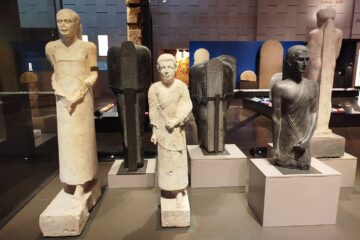
A short drive further leads to Memphis, the legendary capital of the Old Kingdom. Today, Memphis is an open-air museum home to a colossal limestone statue of Ramesses II and an alabaster Sphinx.
Together, these three sites form an unrivaled 4,000-year timeline of royal power, religious devotion, and architectural ambition — all within a single day’s reach from the coast.
Inclusions
- Round-trip transfer in a private, modern, air-conditioned vehicle
- Entrance fees to all sites on the itinerary
- Licensed expert Egyptologist guides throughout the day
- A traditional Egyptian lunch at a quality local restaurant
- Bottled water and beverages during the tour
- All taxes and service charges
Exclusions
- Drinks purchased during lunch (beyond what’s served)
- Optional gratuities for your guide and driver
- Personal shopping or optional camel rides at Giza
- Travel insurance
What to Bring on the Day
Egypt’s sun is strong, and the sites are open-air. Pack smart, and you’ll stay comfortable all day.
- Wide-brim hat or cap
- Sunglasses (UV protection)
- High-SPF sunscreen
- Comfortable, closed-toe shoes
- Light, breathable clothing
- Warm layer (winter months)
- Extra water bottle
- A camera or a charged phone
Full Day Cairo Itinerary
Pickup at El Sokhna Port
Your day begins the moment you disembark. Your private Egyptologist guide will be waiting at El Sokhna Port holding a sign with your name — no confusion, no waiting around.
Once you’re settled in your air-conditioned vehicle, you’ll head west toward Cairo across the Eastern Desert, a journey of roughly two hours.
Your guide will use this time to brief you on the history you’re about to witness, so you arrive informed, curious, and ready.
First Stop — Giza Plateau
The Giza Pyramids Complex
Nothing quite prepares you for the moment the three Great Pyramids come into view. Rising from the Giza Plateau on the edge of Cairo, these colossal structures—built for Pharaohs Khufu (Cheops), Khafre (Chephren), and Menkaure—have stood for over 4,500 years. They remain one of humanity’s greatest unsolved achievements.
Built during the 4th Dynasty of the Old Kingdom, their mathematical precision and astronomical alignments continue to astonish engineers and historians alike.
The Great Pyramid of Khufu (Cheops)
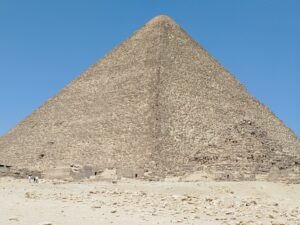
The largest of the three and the only surviving Wonder of the Ancient World, the Great Pyramid of Khufu originally stood 146 meters tall (now 137 meters due to erosion) and weighs an estimated 6–7 million tons.
Surrounding it are three smaller Queen’s Pyramids, the tombs of the pyramid builders, a purification temple, and five boat pits. One of these housed the magnificent Khufu Solar Boat, now displayed at the Grand Egyptian Museum.
Tombs of the Pyramid Builders
Discovered in 1990 and expanded in 2009, these tombs belong to the workers and artisans who actually built the pyramids. They were not slaves, as popular myth suggests, but skilled laborers who were fed, housed, and honored in death.
The tomb of Ptah-shepsesu and his wife is among the most vivid, with well-preserved burial shafts offering a rare window into the daily lives of ancient Egypt’s working class.
Khafre’s Valley Temple
This remarkably preserved granite temple—part of Khafre’s pyramid complex—was where the pharaoh’s body was ritually prepared. This included the sacred Opening of the Mouth ceremony.
Its design bears striking similarities to the Osireion at Abydos, hinting at a shared architectural tradition across Egypt’s most sacred sites.
Giza Plateau — Continued
The Great Sphinx of Giza
Standing guard over the Giza necropolis, the Great Sphinx is one of the most iconic and enigmatic monuments in the world.
Carved directly from a single limestone ridge, it stretches 73 meters in length and rises 20 meters at its highest point. This is a creature with the body of a lion and the face of a pharaoh, most likely Khafre himself.
Between its enormous forepaws rests the Dream Stele, erected by Prince Thutmose IV of the 18th Dynasty (New Kingdom). The stele recounts a divine promise made to him in a dream.
Your guide will share the many layers of myth, history, and ongoing archaeological debate that make the Sphinx one of Egypt’s most fascinating subjects.
Midday Break
Traditional Egyptian Lunch
After a rich morning on the Giza Plateau, you’ll sit down to a proper Egyptian lunch at a well-regarded local restaurant.
Expect fresh mezze, slow-cooked meats, fowl, koshary, and the kind of warm hospitality that Egypt does best.
It’s a relaxed pause before the afternoon’s discoveries—a moment to digest both the food and everything you’ve seen so far.
Afternoon — Saqqara
Saqqara Necropolis & the Step Pyramid of Djoser
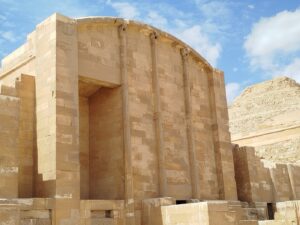
Saqqara is where it all began. Long before Khufu’s pyramid rose at Giza, the architect Imhotep designed and built the Step Pyramid of Djoser here around 2650 BC. This was the world’s first large-scale stone structure and the prototype for every pyramid that followed.
Standing six steps high and encircled by a ceremonial complex of courtyards, chapels, and a southern tomb, it remains one of the most important architectural milestones in human history.
Beyond the Step Pyramid, Saqqara contains a wealth of tombs and monuments spanning centuries of Egyptian history.
You’ll visit the beautifully decorated Tomb of Idut, an Old Kingdom mastaba rich with painted hunting, fishing, and offering scenes that bring ancient Egyptian daily life into vivid focus. The colors are still astonishingly bright after more than 4,000 years.
World’s oldest stone structure, Step Pyramid of Djoser · c. 2650 BC, Tomb of Idut
Final Stop
Memphis — Egypt’s First Capital
Your day ends where ancient Egyptian civilization truly started. Memphis was founded around 3100 BC by King Narmer following the unification of Upper and Lower Egypt, making it one of the oldest cities in the world.
It served as the nation’s capital throughout the Early Dynastic Period and the Old Kingdom, at a time when Egypt was defining what civilization meant.
Today, the site is a designated UNESCO World Heritage Site and home to an atmospheric open-air museum.
The highlights are extraordinary: a colossal limestone statue of Ramesses the Great — one of the finest ever discovered — and a magnificent alabaster Sphinx that predates the famous Giza Sphinx by centuries.
Walking through Memphis, you feel the weight of a civilization that shaped the entire ancient world.
UNESCO World Heritage Site Colossus of Ramesses II Alabaster Sphinx, founded c. 3100 BC
Return Journey
Back to El Sokhna Port
Once your tour concludes, your private vehicle will take you directly back to El Sokhna Port in comfort.
The return drive gives you time to settle, reflect, and perhaps flip back through your photos. You’ll arrive at the port relaxed and well ahead of your ship’s departure—exactly as planned.