

Nile Cruise vs. Land Tour: Which Egypt Itinerary is Right for You?
Almost everyone planning a first trip to Egypt hits the same wall: do you float down the Nile in relative luxury, or do you get on the road and dig deeper into what this country actually feels like?
It sounds like a simple choice. It isn’t. In 2026, the decision between a Nile cruise vs land tour carries more weight than ever, because both options have genuinely evolved.
Cruise ships have gotten smarter (and more intimate, if you know where to look).
Land tours have gotten more flexible, with private operators offering genuinely custom itineraries that a group tour from a decade ago couldn’t touch.
Neither choice is wrong. But one of them is wrong for you. Let’s figure out which one that is.
The Slow Travel Choice
The Nile Cruise Experience
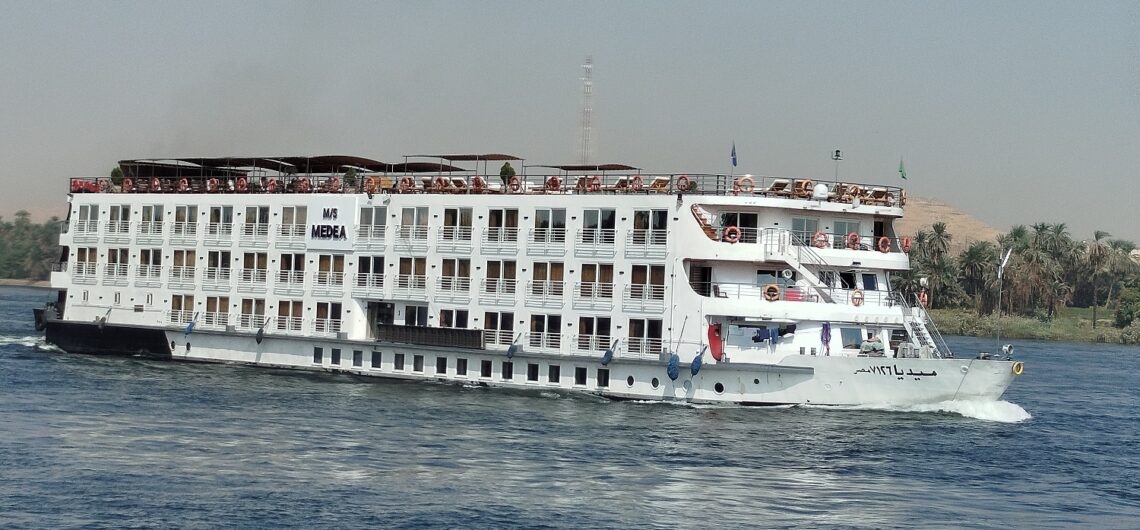
There’s a particular kind of peace that comes from watching the Nile Valley slide past your cabin window at dawn — green fields right up to the desert’s edge, farmers working early, the occasional egret standing absolutely still in the shallows.
A Luxor to Aswan Nile Cruise gives you a front-row seat to that view every single morning without repacking your bag.
The “Unpack Once” Advantage
This is the real selling point that doesn’t get talked about enough. On a cruise, your hotel moves with you. You unpack on Day 1, and that’s it.
For travelers who have done the Egypt land circuit and remember the daily ritual of luggage, check-in queues, and locating the breakfast room in yet another hotel, this is not a small thing.
The classic route runs four to seven nights, docking at Edfu, Kom Ombo, and Esna along the way.
All-inclusive Egypt packages typically cover meals, guided excursions, and entrance fees — which means your daily budget becomes genuinely predictable.
That matters in Egypt, where entrance fees have risen sharply, and site-by-site costs add up fast for independent travelers.
The 2026 Luxury Tier: What’s Changed
The standard big-boat cruise still exists, and it’s still fine for the price.
But 2026 has brought a meaningful expansion of a better option: the modern Dahabiyas. These are small, private sailing vessels — typically carrying 8 to 20 passengers — that move at a slower pace, stop at spots the big ships can’t reach, and feel genuinely Egyptian rather than resort-adjacent.
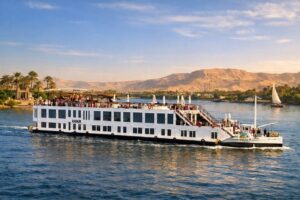
Luxury Nile cruises in 2026 are increasingly Dahabiya-led, with operators offering butler service, curated excursions with private Egyptologists, and wine on deck at sunset.
If you’re comparing apples to apples against a boutique land hotel, a premium Dahabiya often wins on atmosphere.
The catch? They book out months in advance, especially for the October–February window. If this is the route you want, don’t delay.
What You’ll Actually See
A well-designed Luxor to Aswan itinerary hits the heavyweights: Valley of the Kings, Karnak, the Temple of Horus at Edfu, and the double-temple at Kom Ombo (worth it, especially at night when it’s lit).
Most cruise packages include Luxor Temple, Esna temple, Hatshepsut temple and the Colossi of Memnon as well.
What a cruise doesn’t give you is time. An hour at the Valley of the Kings inside a group is a very different experience from a private early-morning visit arranged through a land operator. If that distinction matters to you, make a note of it.
Honest Note Nile Cruises VS Dahabiyas
Standard five-star ships can feel touristy — buffet dinners, pool decks, the same commentary on loop.
To sidestep that, look for smaller operators, specifically those offering Nile cruise packages with 20 or fewer passengers and private guiding. The price difference is real, but so is the experience gap.
Cruise Works Best When You…
- Have 7 days or fewer in Egypt
- Dislike moving hotels every night
- Want a structured, predictable itinerary
- Are you traveling with older adults or young children
- Find road travel tiring or stressful
Cruise May Frustrate You If…
- You want to eat where locals eat
- You like detours and unplanned stops
- Groups of strangers exhaust you
- Cairo and Alexandria are priorities
- You prefer boutique hotels with character
The Deep Dive Choice
The Land Tour Experience
An Egypt private land tour is messier, more demanding, and — for the right traveler — far more rewarding than anything a cruise can deliver.
The road is where Egypt reveals itself: a roadside kushari stall in downtown Cairo, the call to prayer bouncing off limestone in a Luxor side street at 5am, the chaos of a fish market in Alexandria that no tour brochure would ever photograph.
The Flexibility Factor
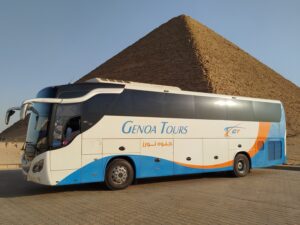
With a flexible schedule and a good private driver and a guide, you can adjust daily. Want to spend three hours at the Egyptian Museum’s mummy room instead of ninety minutes?
Done. Heard about a tea house in Islamic Cairo that’s three hundred years old? Let’s go. This kind of spontaneity is impossible on a cruise and difficult on a group land tour.
A custom Egypt tour built around your interests — ancient history, Islamic architecture, Coptic heritage, food, photography — is now genuinely achievable through private operators at various price points. The days of Egypt tourism meaning a rigid coach itinerary are largely over for independent travelers.
The Cities Are the Point
Here’s the thing a cruise can’t do: Cairo. And Cairo in 2026 is essential.
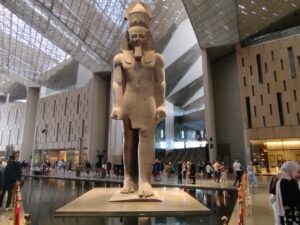
The Grand Egyptian Museum (GEM) has now fully opened, and it’s the most significant archaeological exhibition space in the world.
Tutankhamun‘s complete tomb contents. The Royal Mummies Hall. The scale of it is hard to describe without sounding hyperbolic — spend half a day there minimum.
Alexandria is also worth a night or two. The Bibliotheca Alexandrina, the Roman catacombs, a seafood lunch in the corniche district — it’s a different Egypt entirely from Luxor or Aswan, and most cruise-only travelers miss it completely.
The Honest Downsides
Road travel between Egyptian cities is tiring. A Cairo-to-Luxor drive takes six to eight hours; the convoy system for certain routes still applies.
Overnight sleeper trains exist and are a genuine option, but they’re not for light sleepers.
Boutique hotels in Luxor and Aswan have improved significantly, but Cairo’s traffic and the sheer stimulation of the city can wear on travelers who aren’t used to navigating chaotic urban environments. Plan for slower days, especially if you’re going deep.
The cost:
a well-organized private land tour will often run more than a standard cruise, once you factor in hotels, private transport, and guides. You’re paying for flexibility, and that has a price.
The Local Culture Dimension
If local culture is your primary motivation — not just seeing temples but understanding the society around them — a land tour win.
Full stop. You can eat in places where no other tourists go, have real conversations through a good guide, and build a picture of Egypt that isn’t filtered through a ship’s curated experience.
Side-by-Side Comparison
The clearest way to see the differences at a glance:
| Factor | 🚢 Nile Cruise | 🚗 Private Land Tour |
| Pacing | Fixed schedule, temples in the morning, leisure in the afternoon. Predictable and low-stress. | Fully flexible. Can be intense if you try to cram in too much — self-discipline required. |
| Cost Range | Standard: $800–$1,800/pp Luxury Dahabiya: $3,000–$7,000/pp |
Mid: $1,500–$3,000/pp Luxury private: $4,000–$10,000/pp |
| Cultural Immersion | Moderate. Guided temple visits are excellent; urban Egypt is largely inaccessible. | High. Cities, food, neighborhoods, local interactions — all available. |
| Ease of Transport | Very easy. You don’t move; the ship does. No luggage logistics. | More demanding. Long road stretches, city traffic, multiple check-ins. |
| Temple Coverage | Excellent for Upper Egypt: Luxor, Edfu, Kom Ombo, Aswan included in every route. | Can cover everything a cruise does, plus Abydos, Dendera, and sites off the standard circuit. |
| Grand Egyptian Museum | Not accessible from the river. Requires a separate Cairo day. | Central to most Cairo-rooted itineraries. Half a day minimum. |
| Best For | First-time visitors, relaxation-seekers, families, older travelers. | Repeat visitors, culture-focused travelers, food lovers, photographers. |
| Biggest Risk | Feeling like a tourist conveyor belt if you pick a crowded standard ship. | Burnout from overscheduling, or a bad driver-guide making the difference. |
Practical Logistics Before You Book
Best Time to Visit Egypt
The best time to visit Egypt for both cruise and land travel is the October–April window.
Outside of that, temperatures in Upper Egypt (Luxor, Aswan) regularly exceed 40°C and temple visits become genuinely unpleasant — sometimes dangerous — in the middle of the day.
- October–November: Ideal. Post-summer crowds, temperatures in the low-to-mid 30s, all sites accessible.
- December–January: Peak season. Best weather but highest prices. Book cruise berths and hotel rooms 6+ months out.
- February–April: Still excellent. Spring bloom in the Nile Valley is genuinely beautiful. Ramadan timing varies by year — check the calendar, as some restaurants close during daylight hours.
- May–September: Doable for Cairo and Alexandria (coastal breeze helps), but Upper Egypt in summer is a different proposition. Only experienced desert travelers should visit Luxor in July.
The Grand Egyptian Museum: Don’t Skip It
The GEM in Giza is the single most important new development in Egyptian tourism in a generation.
After years of construction and a phased opening, the full museum is now operational, and it holds over 100,000 artifacts — including the complete contents of Tutankhamun’s tomb, displayed together for the first time in history.
If you’re doing a land tour based in or through Cairo, allocate a half-day minimum. If you’re doing a cruise, it’s worth building a Cairo extension — before or after your Nile segment — just to see this.
A cruise-only Egypt trip in 2026 that misses the GEM is leaving the most significant new attraction on the table.
Budget Egypt Travel Tips
A few practical notes for keeping costs manageable regardless of which route you choose:
- Egyptian pounds fluctuate. As of early 2026, the exchange rate favors foreign visitors significantly — carry dollars or euros and exchange locally for the best rate.
- Entrance fees have been restructured across major sites. A combined ticket for the Valley of the Kings (standard three tombs) runs significantly more than it did pre-2023. Budget separately and specifically.
- Private guiding is worth the premium. A knowledgeable Egyptologist changes what you understand about what you’re looking at, at every site.
- Tipping culture is pervasive and not optional. Build a daily bakshish budget — small bills, many of them — into your travel fund.
- Flying Luxor–Aswan or Cairo–Luxor is cheap, fast, and worth considering as an alternative to overnight trains for travelers on tighter timelines.
“Egypt rewards the traveler who goes in with realistic expectations — not the one who wants it to be comfortable, but the one who can find beauty in controlled discomfort.”
The Honest Bottom Line
Choose a Nile Cruise if…
- You have 5–8 days and want Upper Egypt’s temples covered efficiently
- You value low-stress travel over spontaneity
- You’re traveling with family members who need a consistent base
- Budget predictability matters to you
- You’re open to paying more for a small Dahabiya to avoid the standard-ship crowd
- This is your first time in Egypt, and you want a curated introduction
Choose a Land Tour if…
- Cairo, Alexandria, and the GEM are non-negotiables for you
- You want to eat, explore, and decide each morning what the day looks like
- You’ve been to Egypt before and want to go deeper
- Off-the-beaten-path sites matter — Abydos, Dendera, the White Desert
- You’re a solo traveler or a couple who hates group dynamics
- You have 10+ days and want a complete picture of the country
Two Egypts, One Decision
The Nile cruise and the private land tour are, in a real sense, trips to two different versions of the same country.
The cruise gives you the monumental Egypt — temples, river light, archaeology presented at its best.
The land tour gives you the living Egypt — chaotic, warm, sometimes maddening, and impossible to forget.
The best travelers, the ones who keep coming back to this part of the world, eventually do both.
But if you’re choosing for your first or next trip in 2026, the answer is simpler than it seems: think about what kind of traveler you actually are, not what kind you think you should be. Then book accordingly.
Egypt will deliver, whichever road you take — or river you float.