



The Ultimate Guide to the Luxury Dahabiya Nile Cruise Experience
The Luxury Dahabiya Nile Cruise represents the cornerstone of Nile Heritage Travel. It offers a return to the “Golden Age” of exploration, combining the slow, rhythmic pace of the past with the refined comforts of modern high-end hospitality.
What is a Dahabiya Nile Cruise?
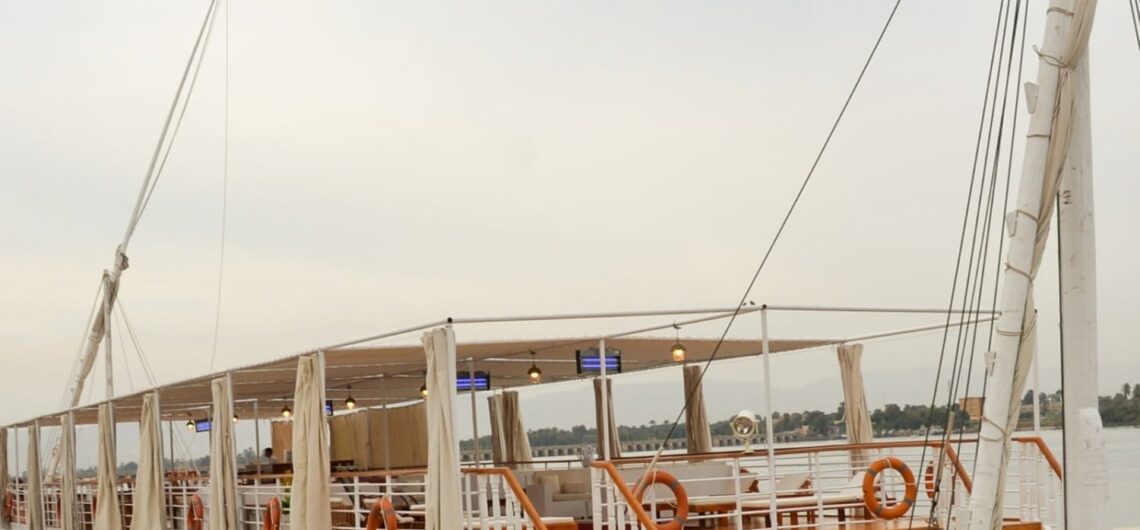
A traditional Egyptian dahabiya is a shallow-bottomed, two-masted sailing boat. Historically, these were the vessels of choice for 19th-century royals and aristocrats like Amelia Edwards and Gustave Flaubert.
Unlike motorized ships, a Dahabiya relies primarily on the wind. When the breeze catches the lateen sails, the boat glides in near silence, allowing you to hear the rustle of palms and the distant calls from riverside villages.
It is the most authentic Nile experience available today, designed for those who value soul over scale.
Why Choose a Dahabiya Nile Cruise Over Large Ships?
The most compelling reason to choose a Dahabiya is access. Large cruise ships are restricted by their size; they must dock at crowded, industrial piers and follow a rigid, synchronized schedule that often results in “terminal fatigue.”
On a Dahabiya, you aren’t a face in a crowd of three hundred; you are a guest on a private floating villa, where the itinerary can breathe and adapt to your interests.
Private Nile River Sailing
offers a different philosophy. Because of their small size, Dahabiyas can moor at the edge of tiny islands, remote villages, and ancient sites that large ships simply cannot reach.
On a Dahabiya, you aren’t a face in a crowd of three hundred; you are a guest on a private floating villa, where the itinerary can breathe and adapt to your interests.
What Does a Dahabiya Nile Cruise Itinerary Look Like?
A Dahabiya Egypt itinerary typically focuses on the scenic stretch of Luxor to Aswan Sailing. Here is a glimpse of the rhythmic flow of a 5-night journey:
Day 1: The Theban Threshold
Boarding in Luxor, you begin with the Karnak temples and the Luxor temple on the east bank of the Nile. While on the West Bank of the Nile, we visit the Valley of the Kings. The Hatshepsut Temple and the Memnon Colossi.
Day 2: The Temple of Esna and Beyond
After passing through the Esna Lock, some programs include visiting the Temple of Khnum.
The afternoon is spent lounging on the sundeck as the rural Egyptian landscape unfolds like a living tapestry.
Day 3: El Kab and Edfu
Explore the ancient tombs of El Kab, a site rarely visited by large groups. Later, take a horse-drawn carriage to the Temple of Horus in Edfu, returning to the boat for a candlelit dinner on a remote Nile Island.
Day 4: Gebel el-Silsila
This is a highlight of Small Boat Nile Cruises. You visit the ancient sandstone quarries where the stones for nearly all of Egypt’s great temples were hewn.
Large ships sail past this remarkable site.
Day 5: Kom Ombo and the Botanical Beauty
Visit the dual temple of Sobek and Haroeris and the ancient Camel Market of Daraw village.
As you approach Aswan, the river narrows, and the granite boulders of the First Cataract appear, signaling your arrival in the Nubian heartland.
Check out our Best Dahabiya Nile Cruises Packages
Our Exclusive Egypt Tours offer a curated selection of hand-picked vessels that balance historical charm with contemporary luxury.
Who Should Book a Dahabiya Nile Cruise?
This experience is tailor-made for:
History Enthusiasts who want deep-dive tours without the pressure of a ticking clock.
Couples and Honeymooners seeking romance and privacy under the Saharan stars.
Small Groups seeking a “buyout” option for a completely private floating villa.
Photography Enthusiasts who need the “golden hour” light on the river without 500 other people in the frame.
What Makes a Dahabiya Nile Cruise Unique?
It is the “unscripted” moments. It’s the ability to stop the boat because you saw a beautiful sunset, or the chance to walk through a mango grove and speak with a local farmer.
This is Nile Heritage Travel at its most human level—where the barrier between the traveler and the destination finally disappears.
Includes and Excludes
To maintain the standard of luxury Dahabiya Nile cruise travel, most packages are comprehensive to ensure a seamless experience.
What’s Included:
- Full board meals featuring organic, farm-to-table Egyptian cuisine.
- Private Egyptologist guides for all shore excursions.
- All entrance fees to archaeological sites.
- Guided “village walks” to meet local artisans.
What’s Not Included:
- Personal gratuities for the crew (a long-standing tradition in Nile sailing).
Check Out Our Best Dahabiya Tours sections
Our Small Boat Nile Cruises are curated for those who demand both heritage and comfort. Each vessel in our collection features sun-drenched decks, organic Egyptian cuisine sourced from riverside farms, and Egyptologist guides who prefer storytelling over lecturing.
FAQ
Why is a Dahabiya Nile Cruise worth the Money?
You are not just paying for a cabin; you are paying for the silence of the Nile, the expertise of a private guide, and a window into an Egypt that most people never see. It is, quite simply, the finest way to touch history.
Can I book a Dahabiya Nile Cruise as a couple or a family?
Absolutely. Private Nile River sailing is specifically designed for an intimate connection. For couples, it offers a romantic atmosphere that large ships simply cannot replicate.
Families or small groups often prefer to “charter” the entire boat, turning it into a private floating villa for an exclusive Egypt tour.
Are there Wi-Fi and air conditioning on board?
Modern Small Dahabiya Nile Cruises feature whisper-quiet air conditioning in every cabin and satellite-linked Wi-Fi in the common areas.
Keep in mind that as you navigate remote bends of the river far from cell towers, the signal may occasionally dip.
How do I book a Dahabiya Nile Cruise?
Because a Luxury Dahabiya Nile Cruise typically carries only 10 to 16 guests, availability is the greatest challenge. Most discerning travelers secure their cabins 6 to 12 months in advance.
Choose the Dahabiya depending on your date schedule, fill the booking form, and that’s all.
How does the food on a Dahabiya differ from a standard ship?
On a Dahabiya, the kitchen is “market-to-table.” Unlike the mass buffets of large liners, your onboard chef sources fresh, organic ingredients from the very riverside villages you sail past.