

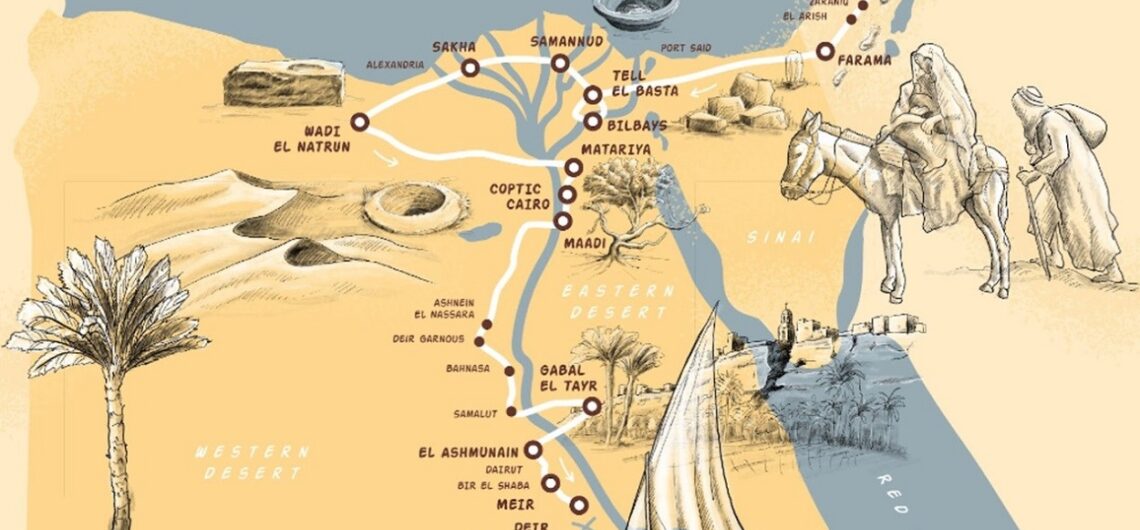
The Holy Family Trail in Egypt: Route, Sacred Sites, and History
The Holy Family’s journey to Egypt stands as a cornerstone of Christian history, marking a profound moment of faith and survival.
Driven by divine guidance, the Infant Jesus, the Virgin Mary, and Saint Joseph fled Bethlehem to escape the decree of King Herod. This flight was not just a search for refuge; it was a mission to find safety and peace in a land that would become a sanctuary during an era of great peril.
Ancient Prophecy and Divine Power
This historic trek is deeply intertwined with Old Testament prophecy, specifically the promise that the Lord would enter Egypt to reveal His glory.
While the biblical account remains humble and concise regarding their specific routes or the exact duration of their stay, the weight of the story has only grown over the centuries.
It serves as a powerful testament to God’s protection and the fulfillment of ancient scripture.
Miracles, Traditions, and Sacred Sites
Over time, the gaps in the historical record have been filled by rich oral traditions and local stories passed down through generations. These accounts detail the various miracles and sacred landmarks associated with their travels across the Egyptian landscape.
Divine Intervention:
Stories of idols falling and springs of water appearing.
Sacred Landmarks:
Specific sites across Egypt that are still venerated today.
Cultural Legacy:
A spiritual heritage that remains special and unforgettable for millions of believers worldwide.
The Fundamental Beliefs of Christianity
Christianity delivers a universal message of hope, love, and divine purpose that continues to inspire millions globally.
At its core, the faith is monotheistic, centered on one God who exists in three persons: the Father, the Son, and the Holy Spirit—often referred to as the Holy Trinity.
Christians believe that God is the intentional creator of the universe, offering wisdom and constant compassion to every individual.
The Role of Jesus Christ
At the heart of the faith stands Jesus Christ. Christians follow His teachings, recognizing Him as the Son of God and the Savior of humanity. His life serves as a blueprint for daily living, emphasizing:
- Unconditional Love: Caring for others regardless of their background.
- Forgiveness: Letting go of grievances to find inner peace.
- Humility: Serving others with a modest and kind spirit.
The belief in the Crucifixion and Resurrection of Jesus is the ultimate symbol of God’s grace. It signifies the victory over death and provides believers with the promise of a restored relationship with the Creator, filling their lives with enduring hope.
Spiritual Practice and Prayer
Daily prayer is the lifeline of a Christian’s spiritual journey. It is a direct line of communication to seek guidance, express gratitude, and find solace.
Alongside prayer, studying the Holy Bible allows believers to internalize God’s word and apply ancient wisdom to modern challenges.
The Holy Bible: A Divine Guide
The Holy Bible is the foundational text of the Christian faith. It is more than a historical record; it is a living source of strength and direction.
Christians revere the Bible as the inspired word of God, turning to its pages for clarity during life’s most difficult moments.
Structure: Old and New Testaments
The Bible is divided into two primary sections that work together to tell a story of redemption and faith:
- The Old Testament: Explores the origins of the world, the story of creation, and God’s early covenant with His people.
- The New Testament: Focuses on the life and ministry of Jesus, the works of His apostles, and the birth of the early Church.
Though written by various authors over centuries, the Bible maintains a unified message. It promotes virtues such as patience, kindness, and integrity, serving as a trusted companion for personal growth and spiritual maturity.
Core Christian Teachings and Values
Christian teachings provide a practical framework for leading a meaningful and balanced life. By focusing on core values, these principles help individuals foster healthy relationships and contribute positively to society.
The Power of Love and Faith
- Centrality of Love: Christians are called to love God wholeheartedly and extend that same compassion to their neighbors. This creates a ripple effect of kindness in communities.
- The Strength of Faith: Faith provides the confidence to navigate life’s uncertainties. By trusting in a higher power, believers maintain a positive outlook and emotional resilience.
Living with Integrity
Followers of Christ strive to act with honesty and responsibility. The teachings encourage believers to:
- Avoid Judgment: Practicing empathy instead of criticism.
- Support the Vulnerable: Actively helping those in need and advocating for justice.
- Choose Righteousness: Making ethical decisions even when faced with pressure.
By embracing these values, people can experience a life defined by inner peace, purposeful action, and a deep connection to both God and humanity.
Christian Worship Practices
Worship in Christianity provides a vital path for spiritual connection and community strength. These practices center on finding inner peace and a sense of belonging through shared and private devotion.
- Prayer: The core of worship, allowing a direct, personal dialogue with God for guidance and gratitude.
- Church Services: Communal gatherings featuring hymns, scripture readings, and reflection to foster spiritual unity.
- Sacred Rituals: Baptism represents a spiritual rebirth, while Communion honors the sacrifice and love of Jesus.
- Festivals: Joyful annual celebrations that reinforce faith and bring balance to daily life.
Key Religious Symbols
Christian symbols serve as visual anchors for faith, making spiritual concepts more accessible in everyday life.
- The Cross: The premier symbol representing salvation, divine sacrifice, and eternal hope.
- Ichthys (The Fish): An ancient sign of recognition and unity among believers.
- The Dove: Represents the Holy Spirit, purity, and the presence of divine peace.
- Light & Candles: Symbolic of God’s guidance and the triumph of faith over darkness.
The Holy Family
The Holy Family—Jesus, Mary, and Joseph—serves as the ultimate model for faith, loyalty, and household unity.
- Virgin Mary: A symbol of devotion, humility, and total trust in the divine will.
- Saint Joseph: The protector who embodies quiet strength, responsibility, and hard work.
- Jesus Christ: The center of the family unit, teaching the world the power of forgiveness and compassion.
Motivations for the Journey
Every meaningful journey is driven by a specific purpose that defines its impact on a person’s life and growth.
- Exploration: The desire to discover new cultures and expand one’s worldview.
- Pilgrimage: Traveling to sacred sites for spiritual renewal and a deeper connection to God.
- Growth: Moving for education or career advancement to build a better future.
- Connection: Journeys made to strengthen family bonds and celebrate life’s milestones.
The Start of the Journey
The beginning of a journey is a pivotal moment of transition, combining careful planning with the excitement of the unknown.
- Intention: Every path starts with a clear “why,” giving the traveler motivation and direction.
- Preparation: Organizing routes and essentials ensures a successful and smooth experience.
- Emotional Transition: A mix of curiosity and anticipation marks the shift from routine to a new phase of personal growth.
The Sacred Path: A Spiritual Journey Across Egypt
Embarking on a sacred journey across Egypt is a transformative experience that weaves together ancient history, profound faith, and divine discovery.
This route allows travelers to walk through the “Gate of History,” visiting religious tourism sites that define Egypt’s spiritual heritage.
By following the Flight of the Holy Family, visitors explore legendary landscapes where every stop tells a story of protection and divine presence.
This trail is more than a tour; it is a pilgrimage that fosters spiritual growth, offering a unique connection between the heart’s devotion and the world’s oldest civilizations.
Key Stations on the Holy Family Trail
Tel Basta: The Miracle of the Spring
Located in the eastern Nile Delta, Tel Basta is a vital landmark. Tradition holds that as the Infant Jesus passed through; a sacred spring of water miraculously appeared. This site stands as a powerful symbol of hope, marking the moment when spiritual light entered an ancient land.
Mostorod: The Well of Purity
Near modern-day Cairo, Mostorod (also known as Al-Mahamma) is revered as a place of rest. Here, the Virgin Mary is said to have bathed the Christ Child and washed His clothes. This stop represents humility and purity, offering a peaceful atmosphere for those seeking spiritual reflection.
Belbeis: A Sanctuary in the Delta
The city of Belbeis provided the Holy Family with much-needed refuge. Its role in the sacred route highlights the themes of divine protection and resilience. Today, it remains a testament to how faith sustains the weary during life’s most challenging chapters.
Samanoud: A Legacy of Kindness
In Samanoud, the journey highlights the beauty of human compassion. The Holy Family was welcomed with warmth by the local community, symbolizing how hospitality and grace can provide comfort in times of hardship.
Sakha: The Holy Footprint
Sakha is home to one of the most famous relics in Egypt—the footprint of Jesus pressed into a stone. This miracle has made Sakha a major destination for pilgrims looking to connect with the physical presence of the Savior.
Wadi El Natrun: The Desert Refuge
Situated in the Western Desert, Wadi El Natrun became a place of solitude and safety. This area eventually evolved into a global center for Coptic monasticism, representing the strength and endurance found in faith and silent prayer.
The Cairo and Upper Egypt Milestones
Matariya: The Tree of the Virgin Mary
In Matariya, the “Tree of the Virgin” still stands as a living monument. Legend says a spring flowed to provide water for the family, making this site a famous symbol of renewal and blessing within Cairo.
Old Cairo: The Fortress of Faith
Old Cairo (Coptic Cairo) served as a critical hideout. The family found shelter in a cave—now the Saints Sergius and Bacchus Church (Abu Serga). This area remains the beating heart of Egypt’s Christian history, embodying spiritual strength.
Maadi: The Crossing of the Nile
The Holy Family visited Maadi to begin their southern voyage. It was from this point on the Nile that they boarded a boat for Upper Egypt. The Church of the Virgin Mary in Maadi commemorates this departure, symbolizing hope and the safe passage of the faithful.
Al-Muharraq Monastery: The Final Sanctuary
Known as the “Second Bethlehem,” Al-Muharraq Monastery at Mount Qosqam is where the Holy Family stayed for their longest period (over six months). It marks the spiritual completion of their stay in Egypt, serving as a powerful center for worship and endurance.
The Spiritual Impact and Legacy
The spiritual importance of this journey lies in its message of absolute trust in God. The Holy Family faced fear and uncertainty with unwavering patience, providing a timeless example for believers today.
- Values Taught: Patience, humility, and total devotion.
- Universal Message: Divine care is present even in the most isolated places.
- Cultural Connection: The trail unites Egypt’s geography with its deep-rooted religious identity.
Conclusion
The Holy Family’s journey through Egypt is a narrative of love, sacrifice, and victory. By preserving these sacred sites, Egypt keeps a global message of peace alive.
Whether you seek historical insight or a deeper connection to God, this path remains an eternal source of inspiration and unity for every generation.